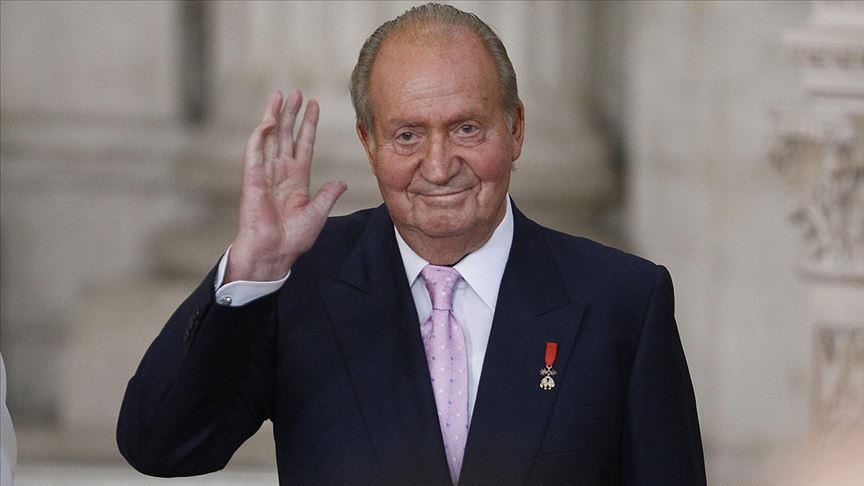
clubpitbullsalem.com – King Juan Carlos I, born on January 5, 1938, is a pivotal figure in Spain’s modern history. As the former king of Spain, he oversaw the country’s transition from dictatorship to democracy after the death of the fascist leader Francisco Franco. His reign, which lasted from 1975 to 2014, saw significant changes in Spain, including the democratization of the nation, the establishment of a constitutional monarchy, and Spain’s integration into the European Union.
Though Juan Carlos I abdicated in 2014 in favor of his son, King Felipe VI, his legacy continues to shape Spain’s monarchy and national identity. The king’s role in the country’s political transformation and his personal contributions to the Spanish royal family are central to understanding his place in modern Spanish history.
Early Life and Education
King Juan Carlos I was born in Rome, Italy, during the Spanish Civil War, as his family was in exile due to the victory of Francisco Franco’s Nationalist forces. He was the grandson of King Alfonso XIII, the last reigning Spanish monarch before the monarchy was abolished following the Spanish Civil War. Juan Carlos was raised in a time when the monarchy seemed to have little future in Spain, given the country’s political turmoil and the long rule of Franco’s dictatorship.
In 1948, Juan Carlos moved to Spain, where he was groomed to succeed Franco as the country’s future monarch. Unlike previous Spanish royals, Juan Carlos was not educated in traditional royal circles but attended military academies, which later became a key aspect of his relationship with Franco. He studied at the Military Academy of Zaragoza, as well as at universities in Spain and abroad, where he learned about governance and military strategy.
Despite the Franco regime’s control over his early life, King Juan Carlos was exposed to a wide range of ideas during his education, which later influenced his political decisions. His relationship with Franco was initially one of mutual understanding, as Franco viewed Juan Carlos as a potential heir who would preserve the traditional values of the Spanish state.
Accession to the Throne
Juan Carlos ascended to the throne in 1975, following the death of Francisco Franco. Franco had named him as his successor, believing that Juan Carlos would continue his authoritarian policies. However, Juan Carlos’s vision for Spain’s future was markedly different. He had long been influenced by democratic ideals, and upon his ascension to the throne, he set the stage for the Spanish monarchy’s transition to democracy.
His reign began at a pivotal moment in Spain’s history. The country was still under the influence of Francoist institutions, and many feared that a return to authoritarian rule was possible. Juan Carlos, however, surprised many by supporting democratic reforms and the establishment of a parliamentary monarchy. His decision to promote political change came to fruition with the drafting of the Spanish Constitution in 1978, which redefined Spain as a constitutional monarchy with a democratic system of government.
The Transition to Democracy
King Juan Carlos I is best known for his leadership during Spain’s transition to democracy, often referred to as the “Transición.” Under his reign, Spain moved from decades of dictatorship to become one of Europe’s most stable democracies. His role was instrumental in fostering political reform and encouraging dialogue between Spain’s various political factions.
In 1981, during a turbulent period in Spain’s democratic transition, a failed military coup threatened the new democracy. In an unprecedented move, King Juan Carlos I stood firm in his support for Spain’s constitution and democratic institutions. On February 23, 1981, when a group of armed officers attempted to take control of the Spanish government, King Juan Carlos I addressed the nation on television, condemning the coup and reaffirming his commitment to democracy. His decisive action during this crisis cemented his legacy as a protector of Spain’s democratic order.
Throughout his reign, Juan Carlos worked to ensure Spain’s political stability. He oversaw Spain’s integration into the European Union, an achievement that was vital to the country’s modernization and economic growth. His leadership played a key role in Spain’s rise as a respected European nation and a member of the global community.
King Juan Carlos I and the Spanish Royal Family
King Juan Carlos I’s personal life has often been in the public eye. In 1962, he married Sofia of Greece and Denmark, with whom he had three children: Infanta Elena, Infanta Cristina, and Prince Felipe, who would later become King Felipe VI. His marriage to Queen Sofia was a symbolic unification of Spain and Greece’s royal houses and remains an important aspect of his legacy.
Over the course of his reign, King Juan Carlos I played a central role in the modernization of the Spanish royal family. He was seen as a more approachable and contemporary monarch, compared to his predecessors, which helped endear him to the Spanish public. His leadership brought the royal family into a new era, positioning the monarchy as an institution that was aligned with democratic values and national unity.
King Juan Carlos and Queen Sofia’s three children were raised with a strong sense of duty to the Spanish people. Their son, Felipe, was particularly prepared for a future in the monarchy, and his education and upbringing under his father’s guidance set him up to take on the role of King of Spain.
Abdication and Legacy
In June 2014, after nearly four decades on the throne, King Juan Carlos I announced his abdication in favor of his son, Prince Felipe. At the time, Juan Carlos was in his mid-70s, and his decision to step down was influenced by a combination of health concerns and a desire to ensure the monarchy’s future stability.
King Juan Carlos’s abdication marked the end of an era, and his son, Felipe VI, ascended to the throne as the new King of Spain. Felipe VI’s reign has continued the modernization process initiated by his father, but Juan Carlos’s legacy remains strong. His efforts in shaping Spain’s democratic transition, as well as his role in bolstering Spain’s international standing, have cemented his place as one of the most influential monarchs in Spanish history.
However, in the years following his abdication, King Juan Carlos’s legacy has also been marred by controversy. Allegations of financial misconduct and scandals surrounding his private life have tarnished his public image. In response to these allegations, King Juan Carlos has distanced himself from the royal family and currently resides abroad. Despite the controversies, his contributions to Spain’s democracy and the stabilization of the Spanish monarchy are remembered as key milestones in the country’s modern history.
Conclusion
King Juan Carlos I is a central figure in Spain’s 20th and 21st-century history. His leadership during Spain’s transition to democracy, his decisive actions during times of political crisis, and his role in modernizing the Spanish monarchy have earned him a lasting place in the annals of history. Though his later years as monarch were overshadowed by personal and political scandals, his role in establishing Spain as a democratic nation cannot be overstated.
As the former king, Juan Carlos I’s legacy lives on in the reign of his son, King Felipe VI, who continues the work of promoting democratic values and stability in Spain. Despite the challenges that have marked his later years, King Juan Carlos I will always be remembered as the monarch who helped guide Spain into a new era of freedom and democracy.
