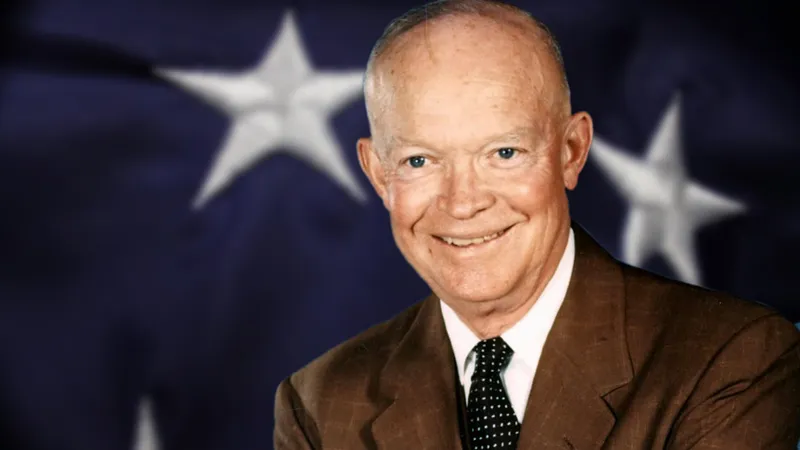
clubpitbullsalem.com – Park Chung-hee, who ruled South Korea from 1963 to 1979, remains one of the most influential yet controversial figures in the country’s modern history. His presidency is marked by the dramatic economic transformation of South Korea, often referred to as the “Miracle on the Han River,” as the nation transitioned from an impoverished post-war society to one of Asia’s leading economies. However, Park’s rule was also defined by authoritarianism, widespread human rights abuses, and the suppression of political dissent. His legacy is a complex one, blending economic success with political repression.
Early Life and Military Background
Born on November 14, 1917, in Gumi, Gyeongsang Province, Park Chung-hee grew up in a traditional Confucian family. His early years were marked by the hardships of Japanese occupation, and like many Koreans of his generation, he was affected by the oppressive colonial rule. After Korea’s liberation in 1945, Park pursued a military career, enrolling in the Japanese military academy during the occupation and later joining the Republic of Korea Army after the Korean War (1950–1953).
Park quickly rose through the ranks, becoming a prominent military officer. By the late 1950s, he was involved in key military operations, and his career was closely intertwined with the country’s political environment. In 1961, Park led a coup d’état that overthrew the civilian government of President Yun Bo-seon, taking control of the country in the name of political stability and economic development.
The 1961 Coup and Rise to Power
In May 1961, Park Chung-hee, along with a group of military officers, staged a coup d’état against the government of President Yun Bo-seon. The coup was sparked by dissatisfaction with the civilian leadership’s inability to resolve the country’s political instability, corruption, and economic difficulties. The coup was swift, and Park quickly assumed power, initially as the leader of the Military Revolutionary Committee.
Park’s rise to power was characterized by his ability to consolidate control and portray himself as a necessary figure to restore stability in South Korea. His military junta effectively dissolved the National Assembly, suspended the constitution, and placed a significant portion of the country’s political power in the hands of the military. Park initially ruled as a military leader, but he would soon seek a more formal political role.
The Establishment of an Authoritarian Regime
In 1963, Park transitioned from military leader to president, winning the presidential election under a new constitution that allowed for greater centralization of power. While his victory was widely seen as a step toward democratic governance, it was clear that Park’s leadership would be marked by authoritarian practices. Over the next several years, Park’s regime sought to suppress opposition, centralize power, and solidify control over South Korea’s political institutions.
Park’s government was characterized by strong state control over the economy, as well as the suppression of political dissent. The establishment of the Korean Central Intelligence Agency (KCIA) allowed Park’s administration to monitor and silence political opposition, leading to widespread human rights violations. Political parties that opposed Park’s leadership were banned, and individuals critical of the regime were often subject to arrest, imprisonment, or worse.
The Economic Transformation: The “Miracle on the Han River”
Despite the authoritarian nature of his regime, Park’s presidency is perhaps most remembered for the remarkable economic transformation South Korea underwent under his leadership. Park implemented a series of ambitious economic policies aimed at industrializing the country and reducing its dependence on foreign aid.
Under Park’s leadership, the government pursued a strategy of export-led industrialization, with a strong emphasis on developing heavy industries, including steel, shipbuilding, and electronics. The establishment of government-backed conglomerates, known as “chaebols,” played a central role in this industrialization. Major companies like Samsung, Hyundai, and LG were heavily supported by state policies that provided them with loans, tax breaks, and other incentives to grow rapidly.
Park’s government also focused on improving infrastructure, with large-scale projects such as the construction of highways, dams, and power plants. These infrastructure investments laid the foundation for South Korea’s rapid economic growth during the 1970s and 1980s. By the end of Park’s rule, South Korea had transformed from a war-torn country with a largely agrarian economy to a modern industrialized nation.
This economic growth earned South Korea international acclaim and earned Park the nickname “The Architect of the Economic Miracle.” However, the success was achieved at a significant cost, including widespread labor exploitation, environmental degradation, and the stifling of political freedoms.
The Yushin Constitution and Expanded Power
In 1972, Park Chung-hee introduced the Yushin Constitution, which significantly expanded his presidential powers and effectively made him the ruler of South Korea for life. The new constitution allowed Park to bypass normal electoral processes, control the legislature, and extend his presidency indefinitely. Under the Yushin system, Park maintained strict control over the judiciary, military, and other key state institutions, further consolidating his autocratic rule.
The Yushin Constitution also allowed for the suspension of civil liberties, and political opposition was ruthlessly suppressed. Critics of the regime, including student activists and labor union leaders, were often arrested or forced into exile. The government also maintained strict control over the media, limiting freedom of expression and press coverage of the government’s shortcomings.
While the Yushin Constitution strengthened Park’s grip on power, it also fueled increasing discontent among the South Korean public. As economic growth continued, so too did resentment toward the lack of political freedoms and the deepening inequality between the rich and poor. By the late 1970s, calls for democratic reform were beginning to gain momentum.
Park’s Assassination and the End of an Era
The Park Chung-hee era came to an abrupt and violent end on October 26, 1979, when he was assassinated by Kim Jae-kyu, the head of the Korean Central Intelligence Agency (KCIA). Kim, a former ally of Park, shot and killed the president in what appeared to be an act of personal revenge, as well as a response to Park’s increasingly authoritarian policies and the political unrest that had been growing in the country.
Park’s assassination marked the end of an era and led to a period of political instability in South Korea. Although Park had consolidated power, his death left a power vacuum that would ultimately lead to the rise of a new military-backed leadership under Chun Doo-hwan.
Legacy: A Complex and Controversial Figure
Park Chung-hee’s legacy is one of stark contrast. On the one hand, he is remembered as the architect of South Korea’s economic rise. His policies of industrialization, export-led growth, and government intervention in the economy laid the foundation for the country’s future success. South Korea’s transformation from an impoverished nation to one of the world’s leading economies is, in large part, a testament to Park’s leadership.
On the other hand, Park’s presidency was marked by widespread political repression, human rights abuses, and the suppression of democratic movements. His authoritarian rule left deep scars on South Korea’s political culture, and the country would not return to democracy until the 1987 June Democratic Uprising, which was inspired by the struggles against Park’s regime.
Park Chung-hee remains one of South Korea’s most divisive figures. Some view him as a visionary who transformed the country, while others see him as a dictator whose heavy-handed rule stifled political freedoms and personal liberties. Regardless of one’s perspective, it is undeniable that Park’s influence on the nation’s development continues to be felt today.
Conclusion: The Authoritarian Architect of South Korea’s Economic Miracle
Park Chung-hee’s presidency was a defining period in South Korean history. His economic policies reshaped the country, transforming it from a war-torn, agrarian economy into a burgeoning industrial power. However, his authoritarian methods, including the suppression of political dissent and the centralization of power, created a complex legacy that continues to shape South Korea’s political landscape. Park remains both a symbol of the nation’s remarkable economic success and a reminder of the costs of political repression.